

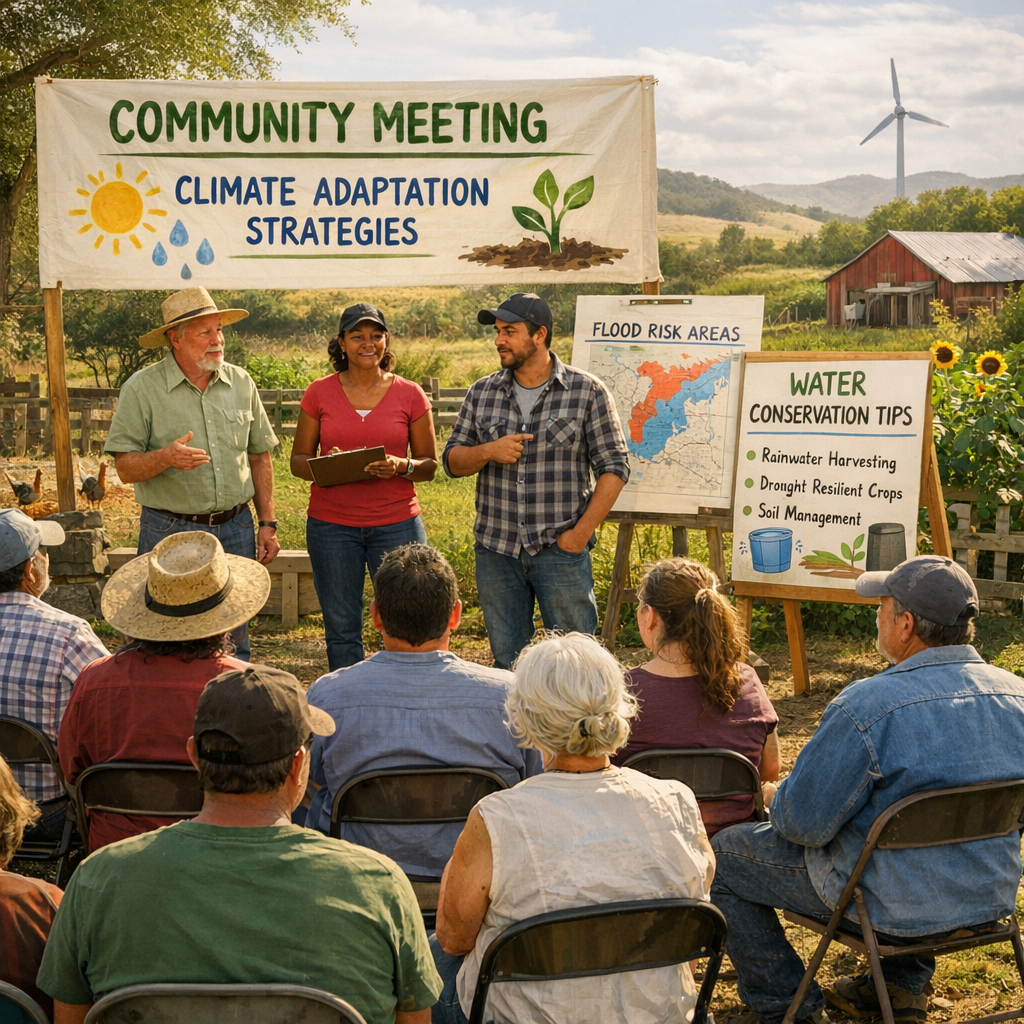
Climate change is a global phenomenon with diverse local impacts, affecting communities worldwide in unique ways. Understanding these localized effects and the corresponding community responses is crucial for developing effective adaptation strategies.
Local Impacts of Climate Change
Communities across the globe are experiencing the effects of climate change in various forms. For instance, Indigenous Peoples and local communities have reported widespread impacts on their social-ecological systems, including changes in biodiversity, water resources, and agricultural productivity. These changes are often specific to local circumstances, highlighting the importance of place-based observations in understanding climate impacts.
In rural areas, climate change poses significant challenges to natural resource-dependent livelihoods. Increased frequency of extreme weather events, such as droughts and floods, disrupts agricultural activities, leading to economic instability and food insecurity. Additionally, these communities often face obstacles in responding to climate change, such as limited access to resources and infrastructure, which increases their vulnerability.
Community-Led Adaptation Strategies
Despite these challenges, many communities are proactively developing and implementing adaptation strategies tailored to their specific needs and environments. A systematic review identified 186 different local strategies employed by Indigenous Peoples and local communities to adapt to climate change impacts. These strategies often involve modifying existing livelihood systems, such as adopting climate-resilient agricultural practices or diversifying income sources.
Locally Led Climate Action (LLCA) initiatives have demonstrated the effectiveness of community-driven approaches. For example, in the Kyrgyz Republic, projects have reached over one million people since 2015, with investments promoting climate adaptation and mitigation. These initiatives have not only enhanced resilience but also created economic opportunities, particularly for women, through climate-smart livelihoods.
Furthermore, community-based responses to climate hazards have been categorized into various types, including infrastructure development, ecosystem-based approaches, and capacity building. These responses are often more effective when they are context-specific and involve local actors in the decision-making process.
Conclusion
As climate change continues to impact communities worldwide, understanding and supporting local adaptation efforts is essential. By leveraging local knowledge and fostering community-led initiatives, we can build resilience and ensure sustainable development in the face of a changing climate.